Fran Farrar, Printmaker, Print installation, Wymondham Abbey, artist residency

Artist Residency at Wymondham Abbey

Artist residency, Arts Council England, DYCP, Installations, Printmaking, Uncategorized, work in progress

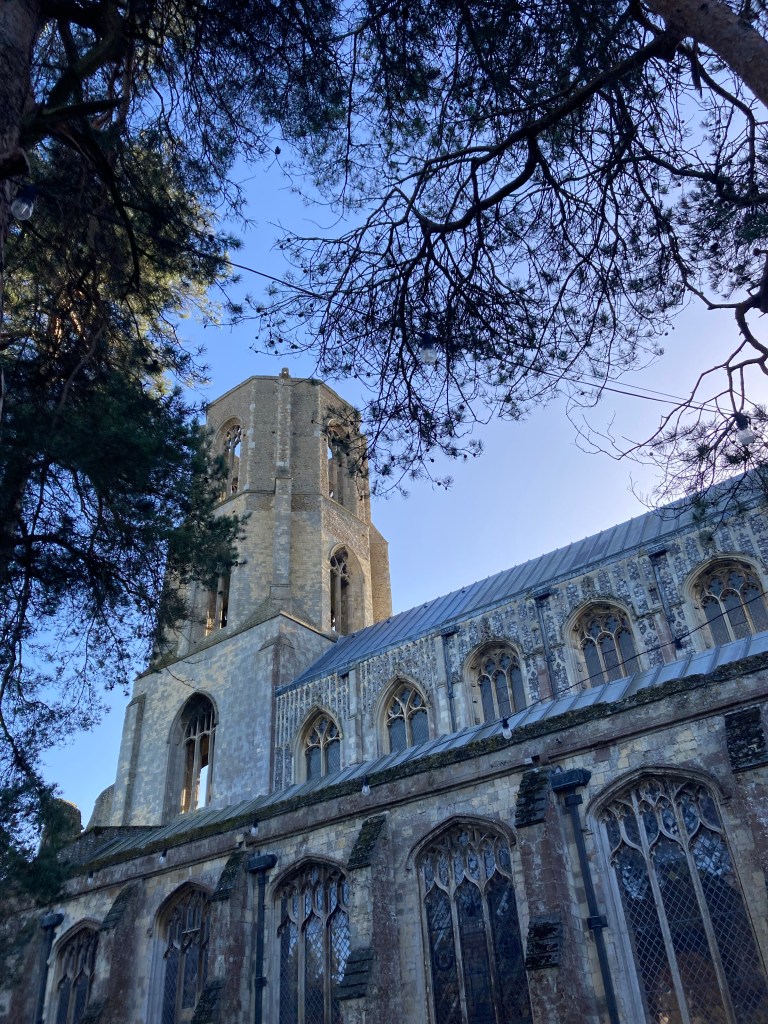
It was an extraordinary experience to be able to take time to make and explore work in the beautiful surroundings of the 900 year old Wymondham Abbey in Norfolk as Artist in Residence. The residency gave me time and space to think, to draw and to record. The calm of the huge Norman building, the support of the Clergy and Church Wardens, and the interest of those visiting made for a very productive residency.

Fran Farrar, Printmaker, Print installation, Wymondham Abbey, artist residency, rift

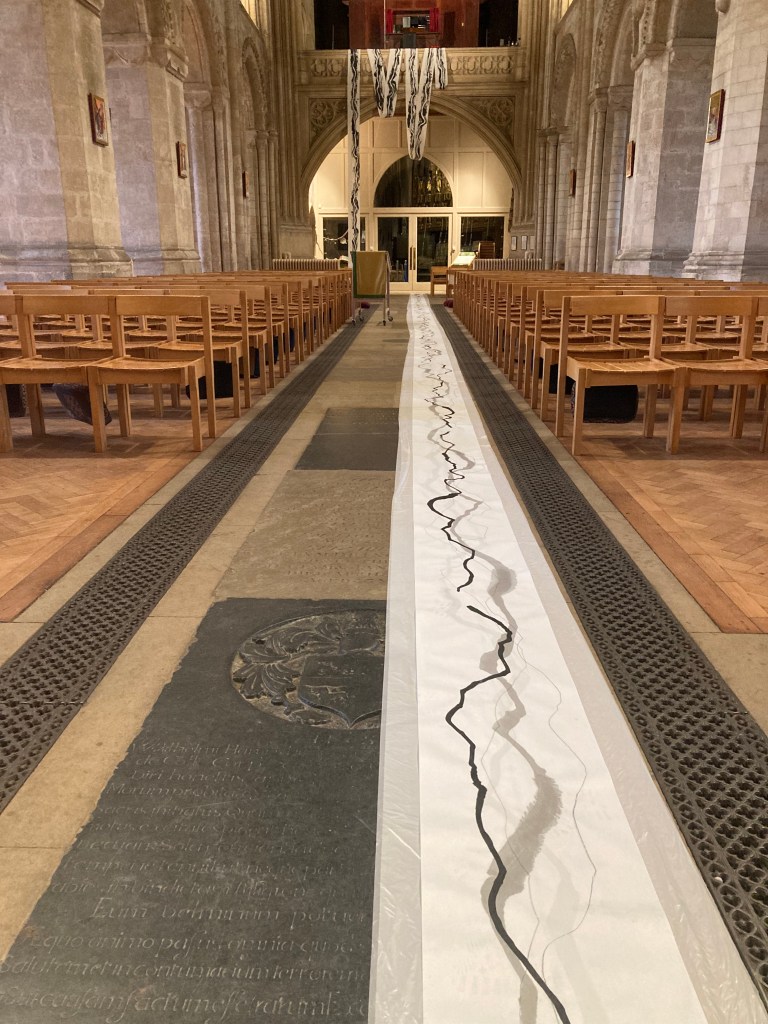
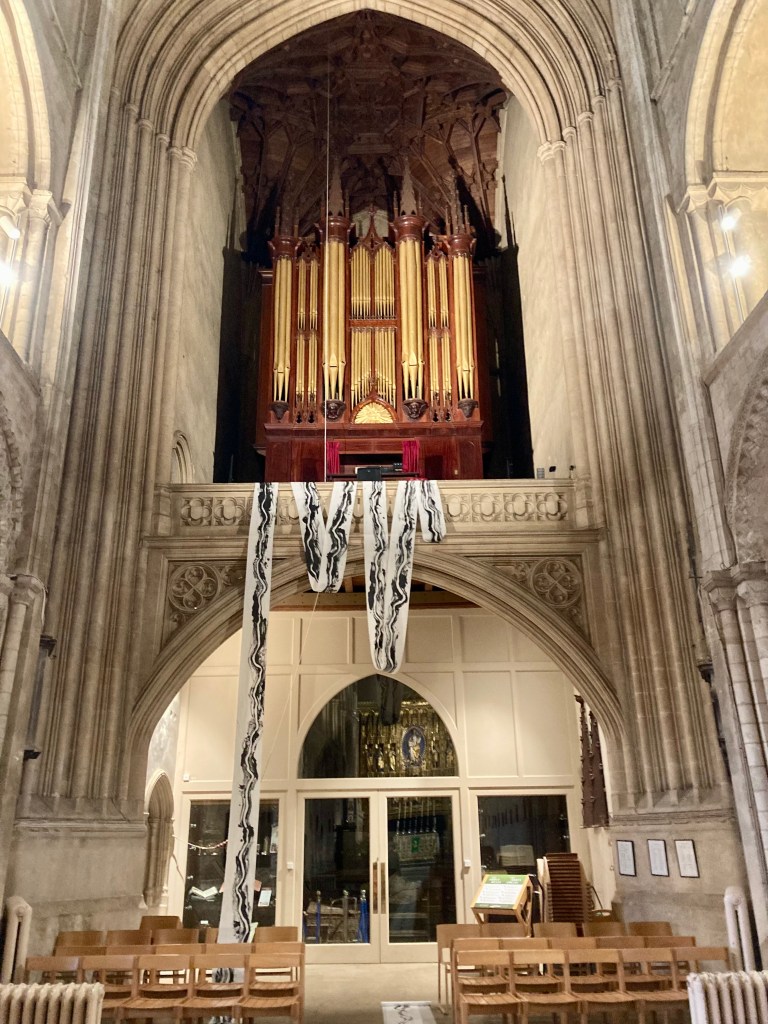
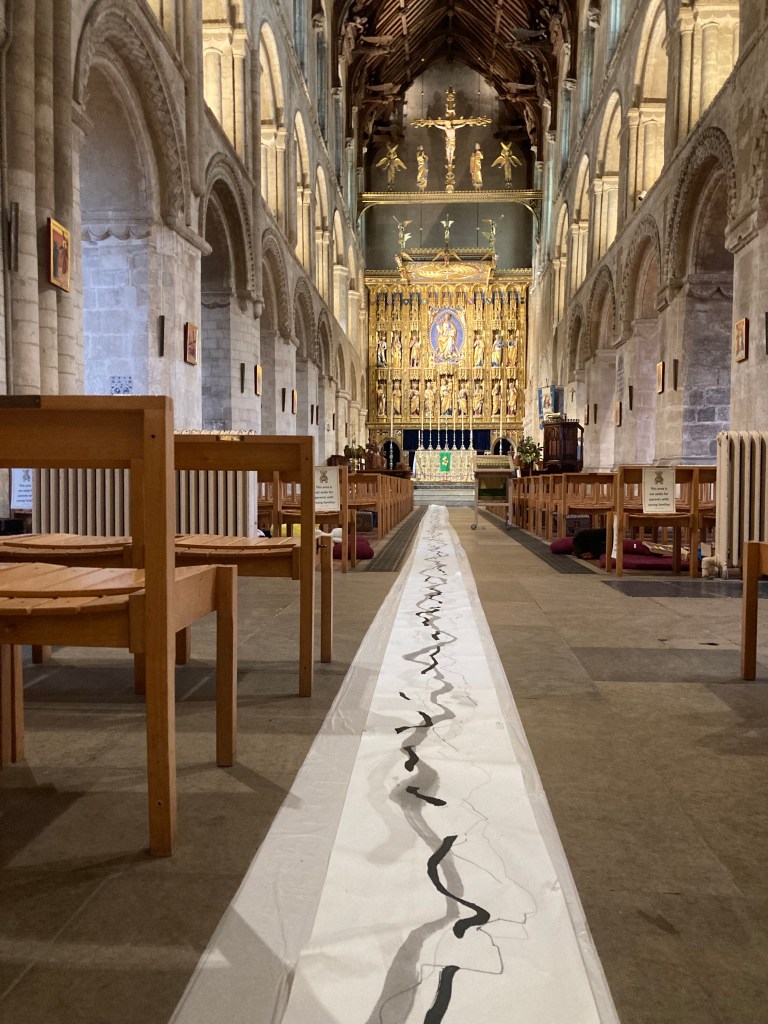
Continuing my current practice of creating monotype printed “Rifts” I had taken with me a new work – “Rift: Wymondham Abbey” to install at the site. The Rifts capture a moment in time, a potential schism in the continuum, becoming part of their location when installed. With the agreement of those at Wymondham Abbey I was able to instal this latest Rift from the organ loft at the end of the nave.
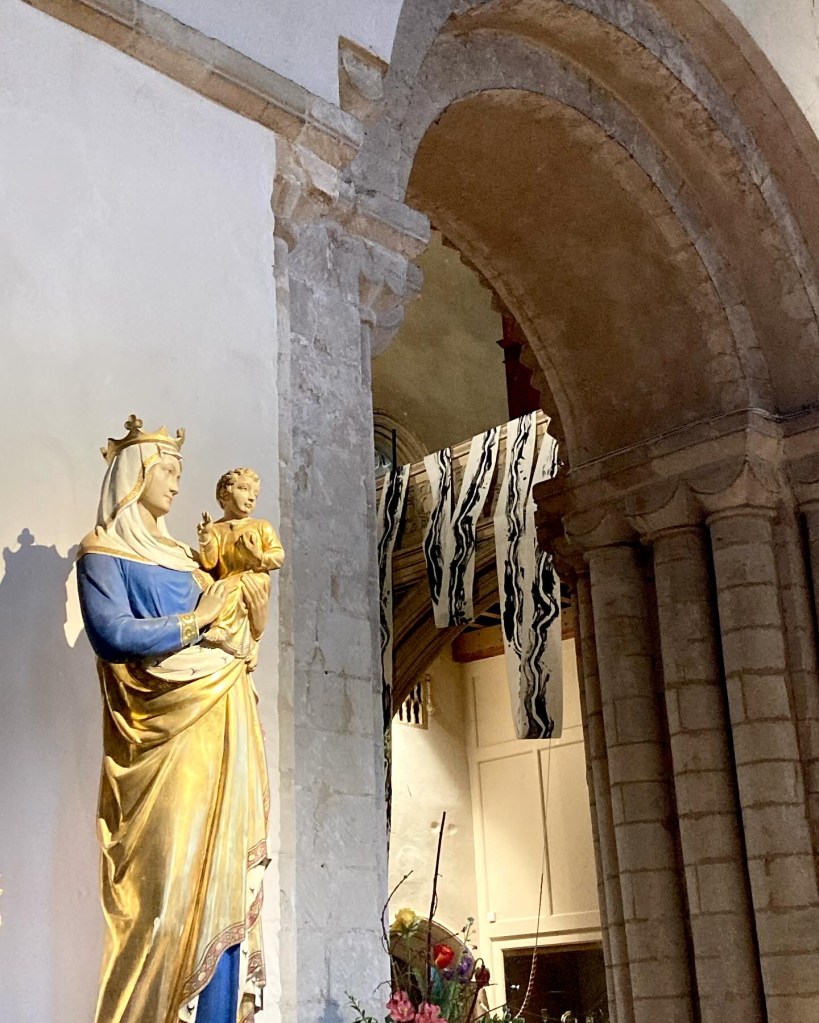
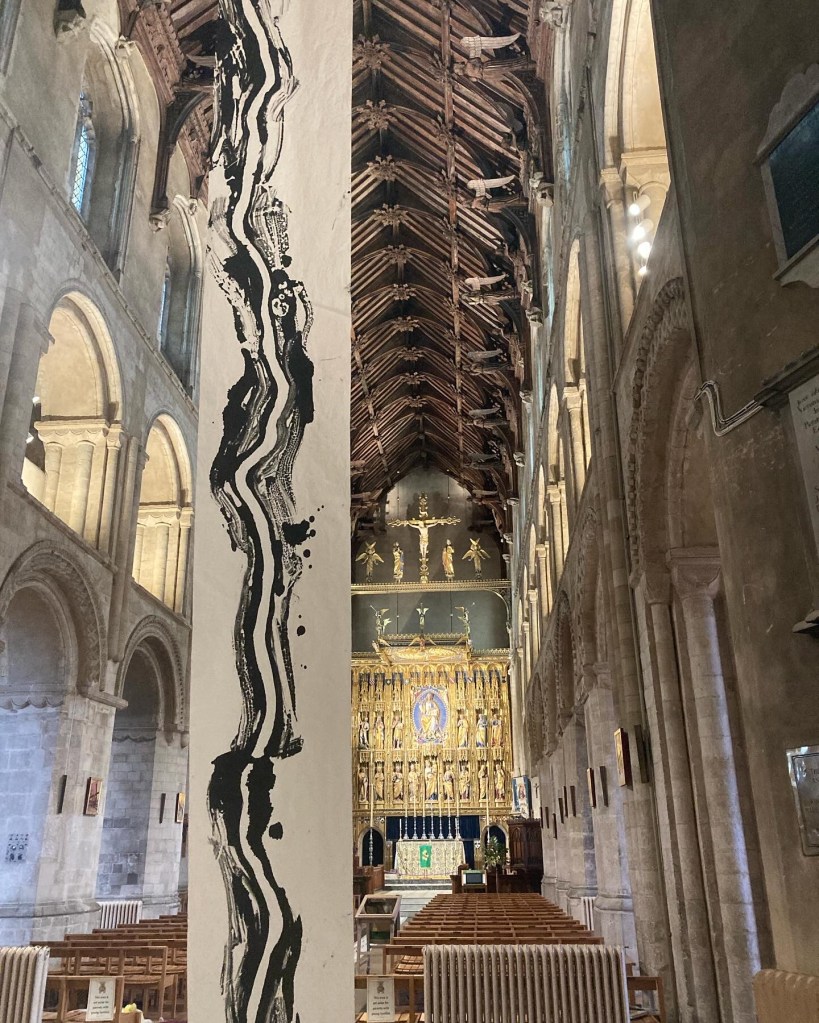
Catching those moments within the Rift, the 25m long print was placed and left in the Abbey for several days. It felt part of the building, soaking up the years and capturing elements of the lives of the thousands who have entered the Abbey. I am captivated by the thought of so many people having shared that space across its 900 year old history, each leaving a tiny part of themselves within the ancient stones. This was one moment, never to be repeated, unique and poignant, my own addition to the many.
I found that I wrote almost as much as I undertook drawings and paintings whilst I was sat in the Abbey. Having time to stop and allow the mind to run is a huge privilege and to record in whatever way seems best suited is necessary. I used several sketchbooks at the same time and even managed to start etching preprepared plates I had taken with me. It feels significant to know that the recording was undertaken within the building although the work that is coming out of the process will potentially be quite different as it progresses.

Fran Farrar, Printmaker, Print installation, Wymondham Abbey, artist residency

I was particularly thankful during the residency to be allowed to roll out a 25m sheet of mulberry bark paper down the full length of the nave. Working several lines down the paper allowed for a transference of recollections from my head and heart on to the paper, creating a visual dialogue with the space. It was a semi-conscious working of the line, a drawn memory fed by experiences and occasions relating to the building. It was a deeply personal exercise undertaken in a very public space and I’m now considering how to develop the resulting work.

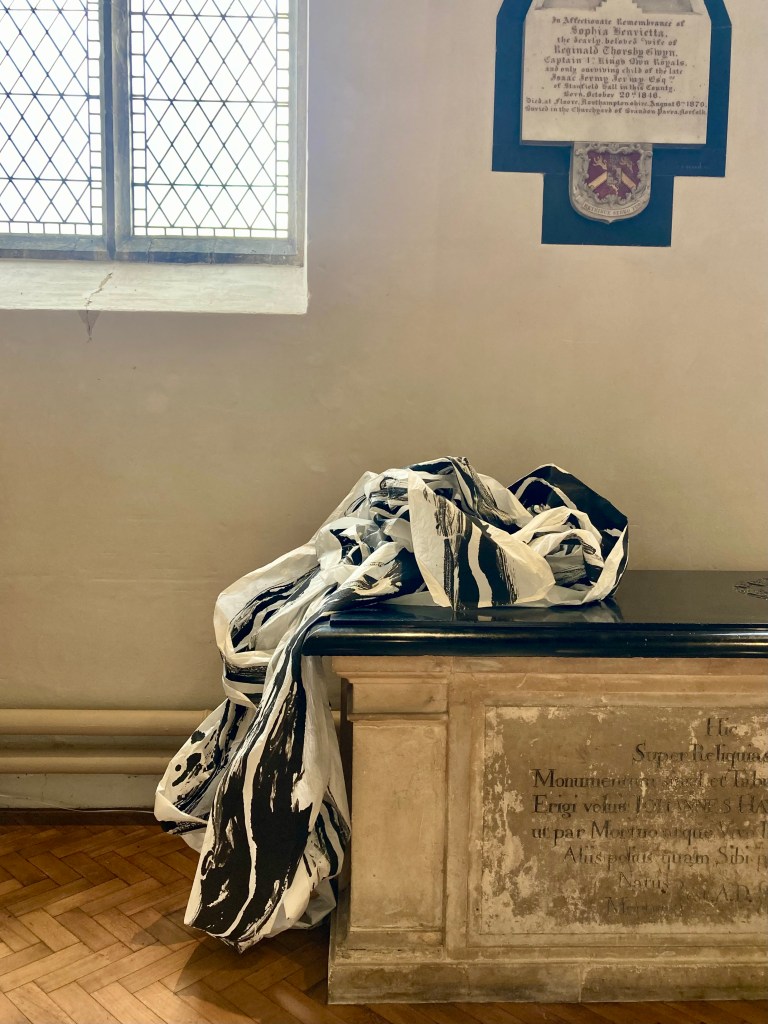
The experience of working within such an important historic building with strong personal connections has had a significant effect on me and I feel it will take time to settle in my head. I’m already developing connected work and considering new locations for further Rifts, whilst also developing etchings reflecting my time at the Abbey. The progression into print installation was supported by my DYCP funding (now concluded), and the need to make, record and develop further print installation work is a current focus which this residency helped support.
Fran Farrar, Printmaker, Print installation, Wymondham Abbey, artist residency

Previously I lived in and around Wymondham for many years and know the Abbey well. Some of you may know that I have incorporated imagery and emotions connected to the building in my drawings and prints so to be able to focus so specifically on work there felt very special. I was also able to use the time to develop and plan work for a forthcoming exhibition in July at Wymondham Arts Centre which I am sharing with an old friend Cindy Gidney who is a 3D artist, basketmaker and ceramist. Cindy and I will be sharing the gorgeous space of Beckets Chapel (very close to the Abbey), to show current work in our joint exhibition “Held”, 8th – 13th July 2025.

Wymondham Abbey – History

60th Venice Biennale, Fran Farrar, DYCP

60th Venice Biennale 2024

Artist Development, DYCP, Exhibitions, Installations

It’s such a real privilege to be able to visit Venice when the Art Biennale is on – the city embraces the event from every angle, absorbing the new alongside the ancient and historic, and fails to flinch at any point. And the 60th edition was as fascinating and electrifying as anticipated.

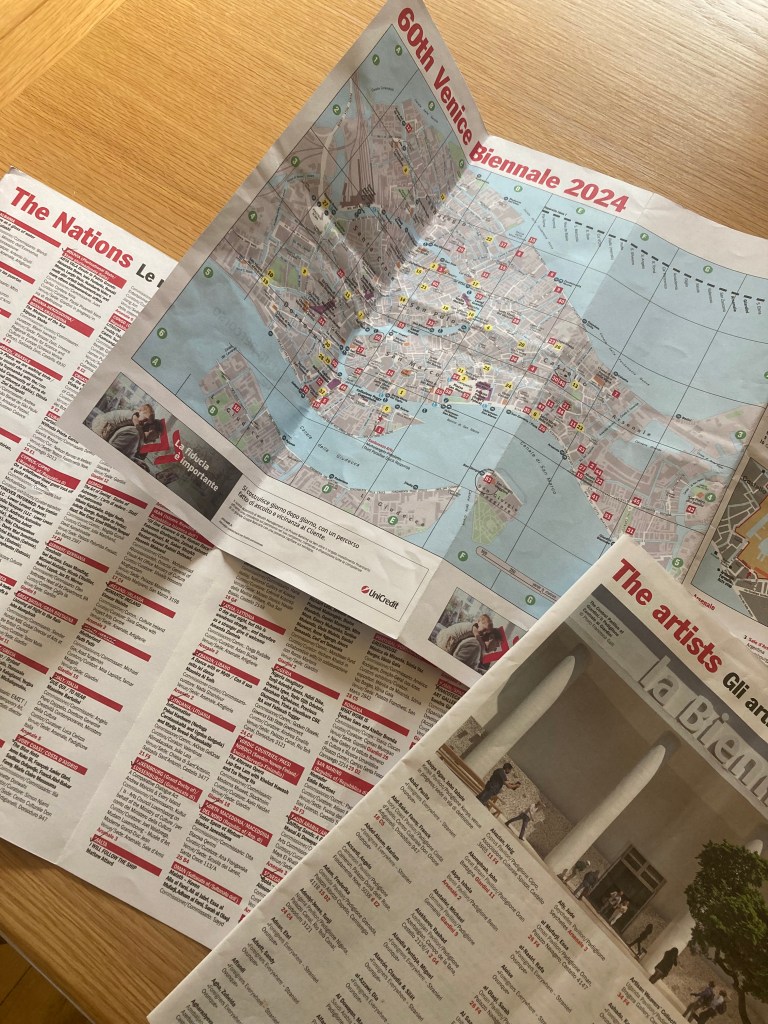
The aim was specific – to look at installation works in detail, what they were, what they said and of course, how they were constructed and displayed. I’ve been lucky enough to have visited the Biennale twice before in previous years but this visit in the autumn of 2024 had a dedicated purpose as it was part of my Arts Council England DYCP program and as such I felt I was aiming to pay particular attention to works in an exacting way. Venice provides the opportunity to see a huge range of work, a significant snapshot of art from across the globe, in one kaleidoscope of an exhibition. The Biennale offers inspiration (food for thought); affirmation (of my own work compared alongside that of many artists); and dismissal (of my own work compared alongside that of many artists!). With such an eclectic mix of artists and approaches, you know that not all work will speak to you. Not all work will illicit a positive response, but having so many artists exhibiting cheek by jowl in one of the most exquisite cities in the world, you do know that you feel excited. 

I spent three very full, long days pacing the spaces – a day in the Garden Pavilions, a day at the Arsenale, and a day scouting out work in palazzos, churches and alleyways. Of the 87 nations represented, I managed to see 60 plus 5 additional ‘collateral’ exhibitions. Lengthy days, much walking and much mind stretching but absolutely worth the focus and effort. 

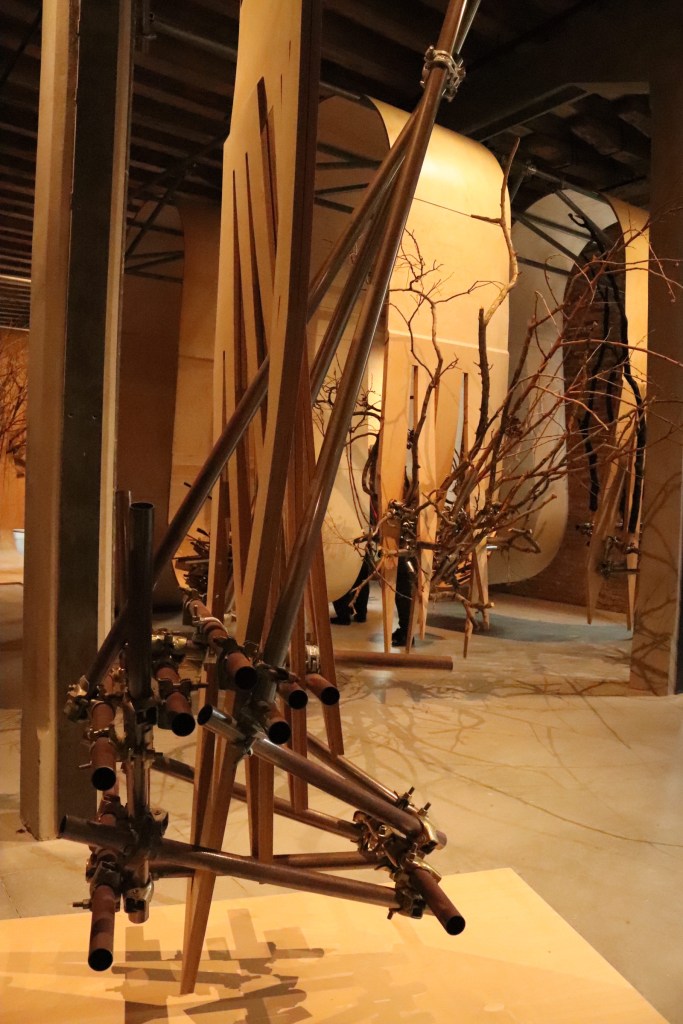
Broadly summarising – There were fewer paintings, more textiles and sadly, I saw only a couple of pieces using traditional printmaking techniques. Film and digital imagery were strong with an emphasis on documentary content in many installation pieces. Large scale sculptures and sculptural installations stood out in their use of space and locations as expected. Not unsurprisingly, the theme of ‘Foreigners Everywhere’ was expressed with a diversity of powerful approaches to cultural identity, geographical migration and spiritual belonging. I would suggest that a considerable volume of the work was exploring a powerful political agenda.

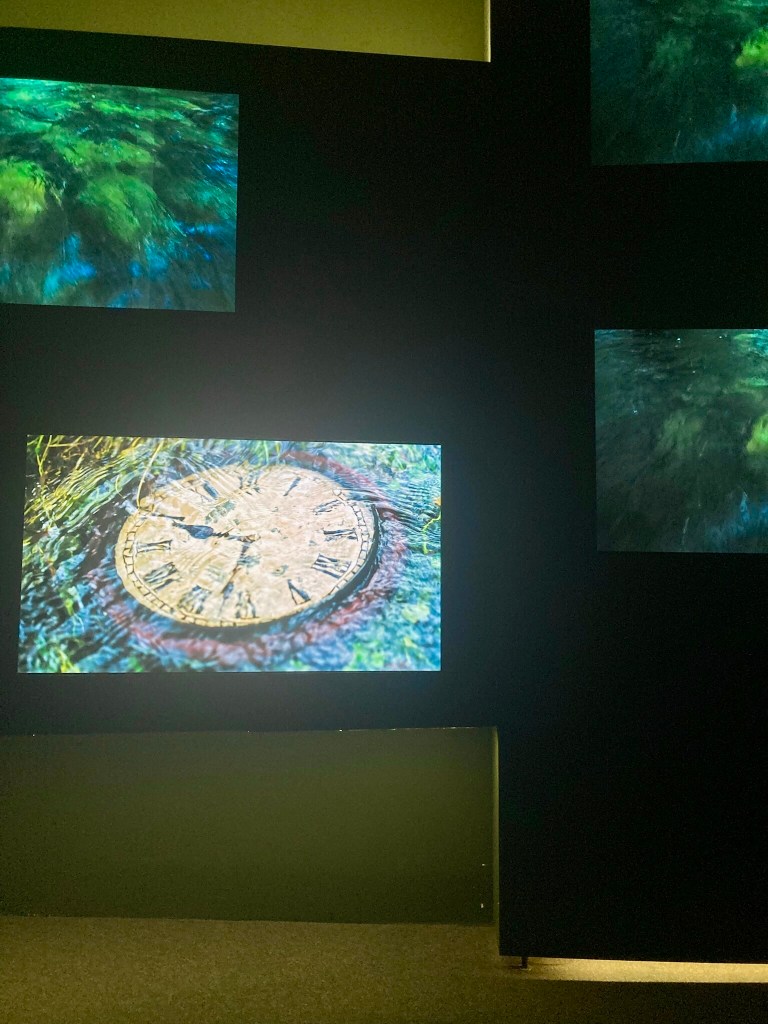
John Akomfrah’s ‘Listening All Night to the Rain’ in the British Pavilion was an absolute standout exhibition for me. The film installations are full of thoughtful and thought-provoking imagery that flows across the screens room after room, intersecting with itself as it narrates and challenges. Gloriously inspiring work from Akomfrah’s @smoking_dogs_films studio.

The purpose built Pavilions in the Gardens provide a gentle start into the exhibition as a whole (if there is such a thing), encased, defined spaces that lead you to the work. The instagram reel below aims to share some of the spaces.

There is such anticipation around exploring the Arsenale and the cavernous spaces never disappoint. Massimo Bartolini’s installation in the Italian Pavilion (below) is much bigger than you first realise! The enormous organ pipe rumbles your bones as the sound resonates in the huge Arsenale building. I went back several times to experience the intensity.

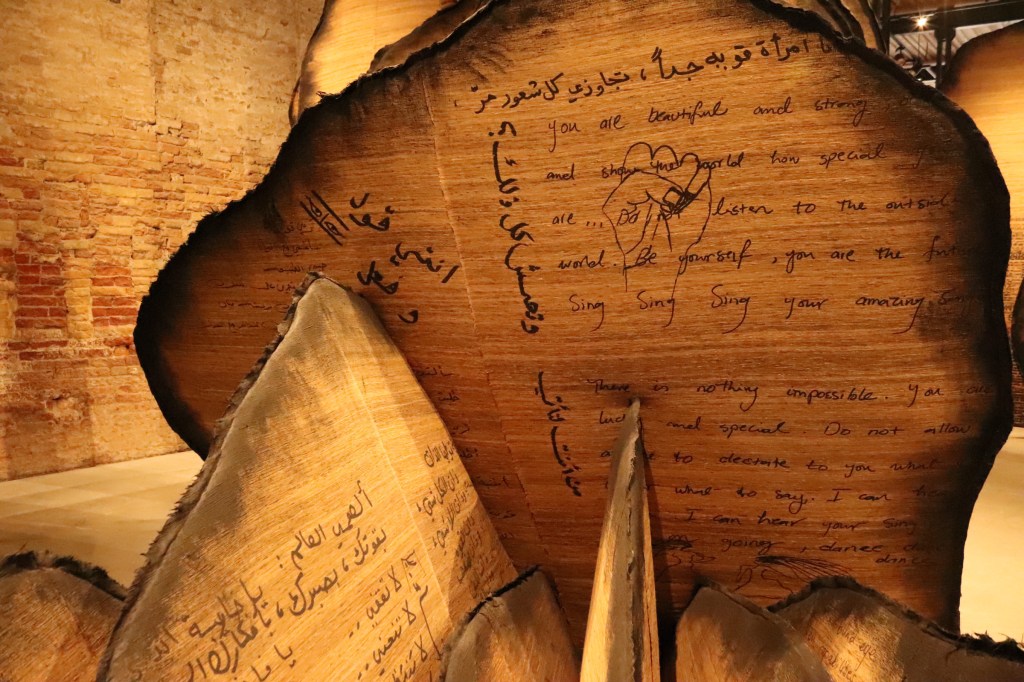
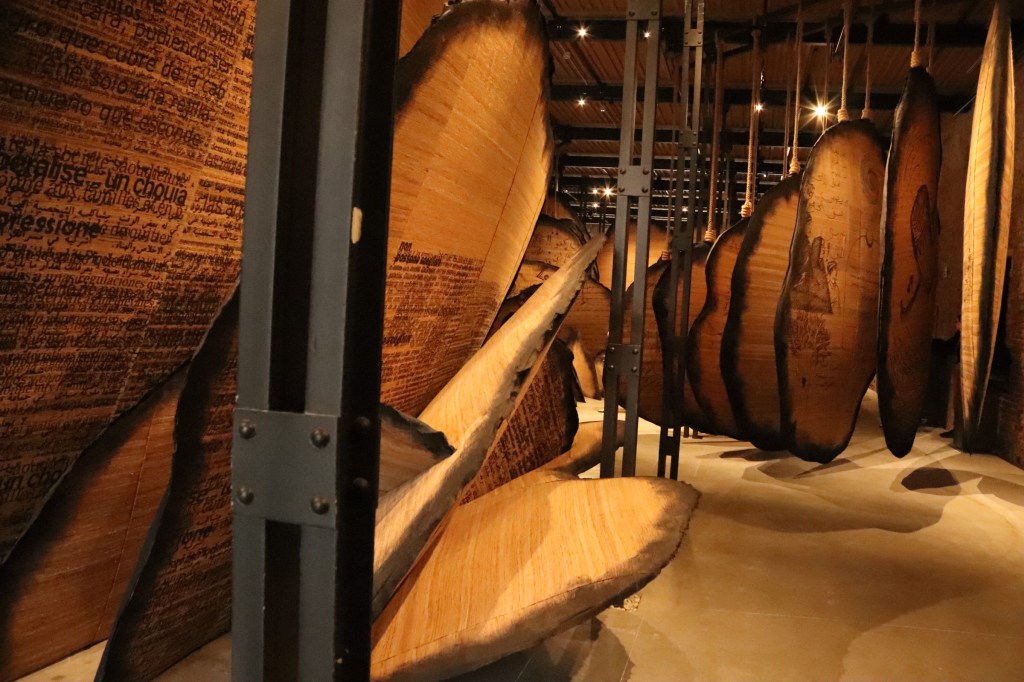
There was so much good work within the historic buildings with @lucianalamothe Argentina and @manaldowayan Saudi Arabia being particular favourites (see below). Large scale sculptural work and installations throughout.

The Arsenale instagram reel below captures more of the large scale installations and sculptural work.

One of the real delights of @labiennale is scouting out the Pavilions and ‘Collateral’ Exhibitions happening across the city outside of the main gallery spaces. Grand palazzos, decaying churches, and residential houses each tucked away waiting to surprise and fascinate. Spaces that aren’t generally open to the public nor usually contain art. They offer much food for thought and provided some inspirational ideas for future work.

The Instagram reel below shows some of the diversity across the city spaces –

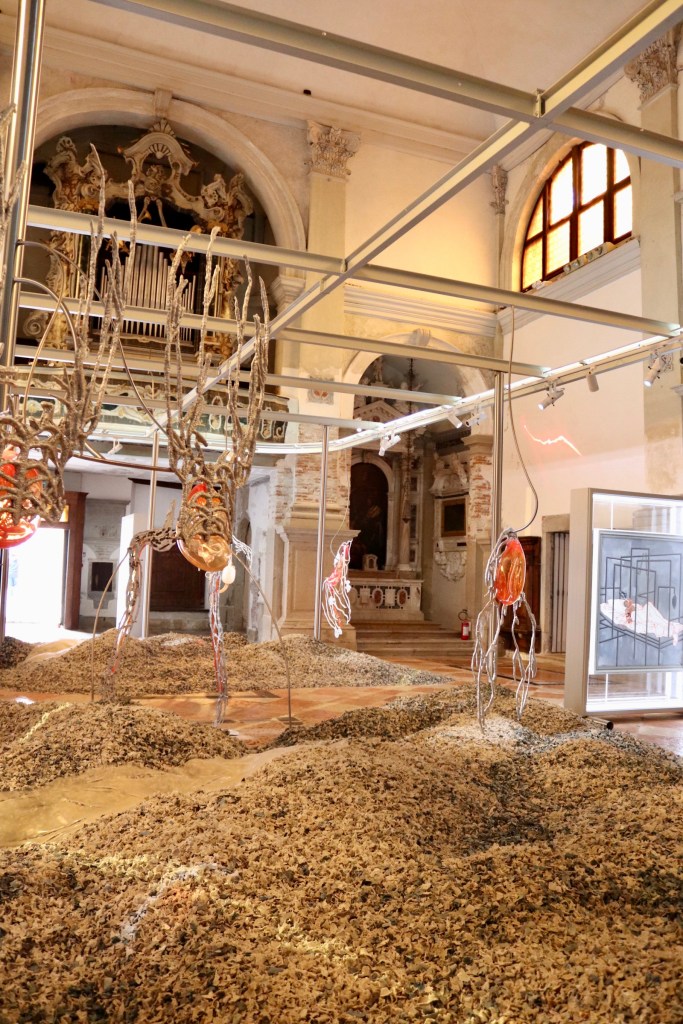
And finally (and leaving the best to last) – Sometimes you see an artist’s work that absolutely captivates your soul and you know they will stay with you for a long time. Berlinde De Bruyckere’s ‘City of Refuge III’ at the Benedictine Monastery  @abbaziasangiorgiomaggiore is one such exhibition. The three new groups of work are hauntingly unsettling, in places the visceral sculptures both repulse and intrigue. The most exciting experience of the Biennale for me – and I was totally smitten.

I believe that taking dedicated time to explore other artist’s work is imperative to understanding where your own work sits. Seeing such an enormous amount of work in such a short time might be considered overwhelming yet the ‘gems’ shine through to mark one’s brain and feed the soul. Photographing, sketching, and note taking retains what’s important and are wonderful to mentally revisit exhibitions weeks or months later. The 60th Venice Biennale gave me the opportunity to look, to feel and to think… (and I’m already thinking about 2026!).

Fran Farrar, printmaker, installation

Exploring Rural Identity Through Art – “Rift: Lower Hewood” Installation for ‘Rural Facets’, Lower Hewood Farm

Arts Council England, DYCP, Installations, Uncategorized
Fran Farrar, printmaker, installation

It’s interesting how elements of your core identity are sometimes so ingrained that you almost forget about their significance. I grew up on the edge of the New Forest in Southern England and took it for granted that the flora and fauna around me were part of normal life. Only on moving away to university at 18 did I begin to realise that not everyone had had the freedom and openness of a rural life. The land outside of cities and towns, which many call ‘the countryside’, feels to me to be the grounding basis to us all. We all come from a rurality, we are each from the land, but it is time and community change that has led us away. The word ‘rural’ all too often refers to something that is lacking, yet for me it is an intrinsic component of our make up.

Taking part in the ‘Rural Facets’ project allowed the space to consider these things and to hear from others about how they interact with the rural. ‘Rural Facets’ was organised by More Than Ponies members as a response to a Visual Arts South West (VASW) open call. It involved in person and online meet ups, and culminated in a wonderful day at the very special and beautiful Lower Hewood Farm on the Forest/Devon/Somerset borders near Chard. Artists were involved from across the SW and South Coast, bringing together their practice – “a forum for critically engaged artists who identify with the / as rural or any of its many facets”.

Fran Farrar, printmaker, installation

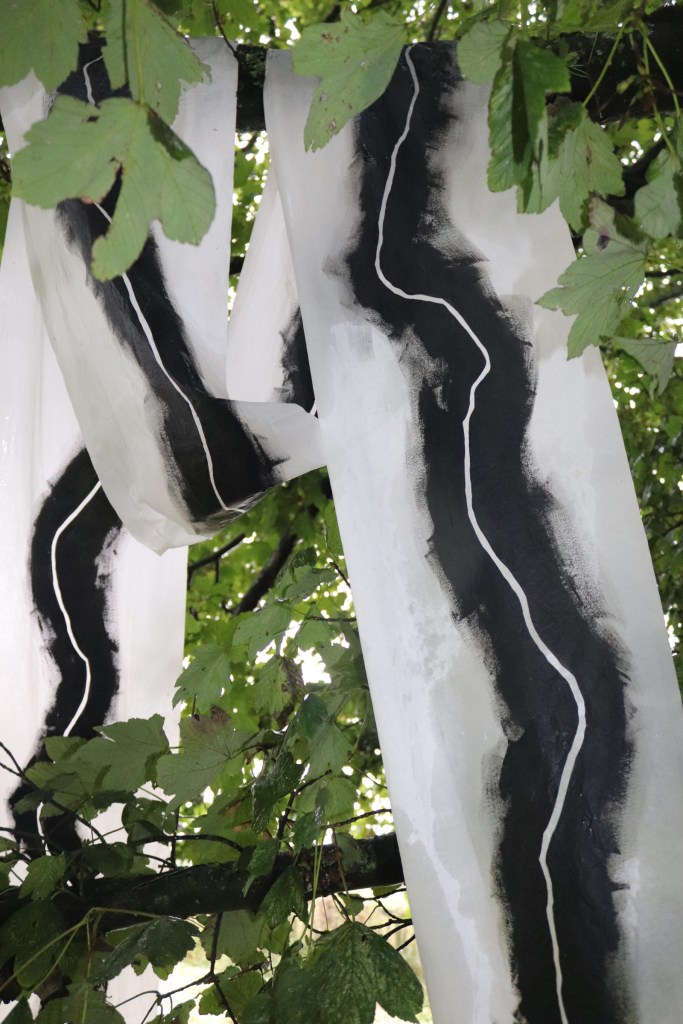
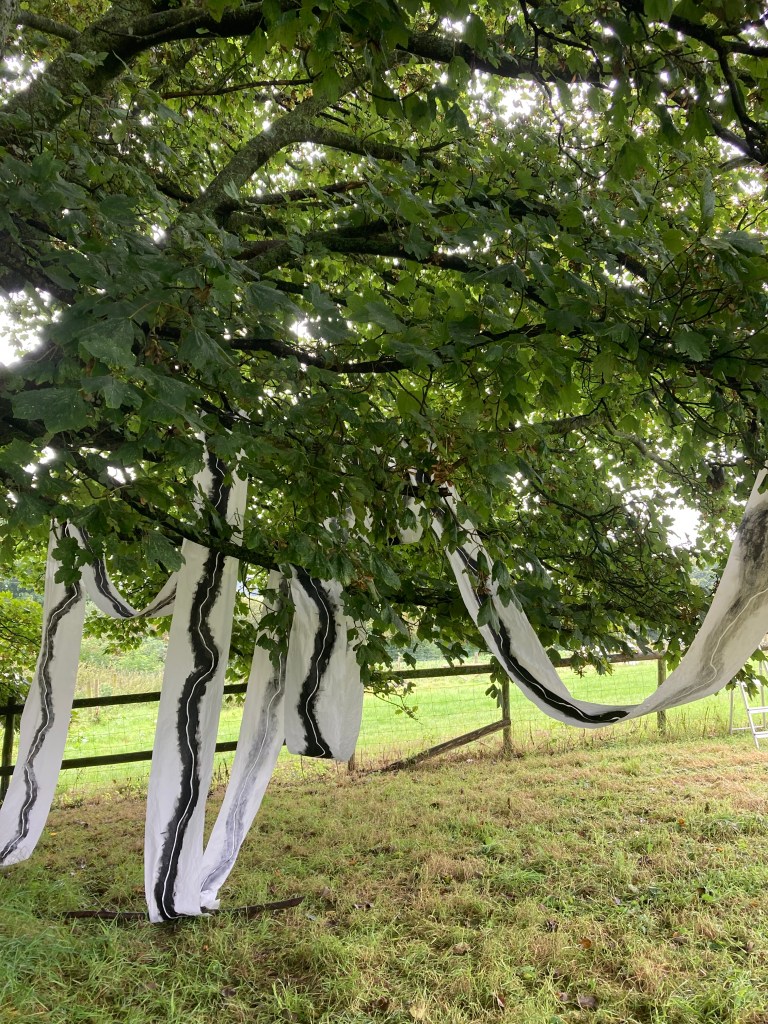
Lower Heywood Farm has given me the opportunity to install a new, site specific ‘Rift’ within the rural environment. I was able to make the installation within the ancient sycamore tree that stands close to the farm buildings in the middle of the farm. 21 metres of mulberry paper, painted and manipulated, then draped and sculpted amongst the branches. Once placed, the ‘Rift’ became part of the tree, secured within the rurality, held in a moment of time. Oh…and it rained! I had anticipated that the heavy rain would cause the paper to disintegrate but it held its form, sodden and dripping, swaying in the wet breeze.

Fran Farrar, printmaker, installation

The installation was filmed throughout the day, capturing the moments created by this specific Rift in this specific location, and the film will be edited to provide both a record and form a presence in it’s self. The Rift is about the occupation of time and space, and the installation holds that time from then onwards. Receiving DYCP funding from Arts Council England and The National Lottery gave the support and encouragement to extend this area of my practice. Stretching my work into installation has given a significant drive and focus for exploring the Rift series and has helped me identify new areas within which to experiment. I feel more in touch with the rural that identifies part of me and feel excited to take this work further.

Fran Farrar, printmaker, installation

“A moment caught in time, a gap in the equilibrium – a rift. Entwined in the ancient tree, the crack of light offers a point where we might slip through. A window within the continuum. A schism within the rural that connects across time.” Rift:Lower Hewood Farm, Fran Farrar

Fran Farrar, exhibition, Phyllida Barlow

Arts Council England, National Lottery Funding Awarded

Artist Development, DYCP

Earlier this year in March 2024 I was thrilled to receive Arts Council England DYCP (Developing Your Creative Practice) funding via The National Lottery funding stream. As anyone who has tackled the online application process alongside the soul searching research and bid writing will tell you, the joy of success is pretty overwhelming. The year of proposed work, research and learning began in April 2024 and feels to be flying along.

DYCP, arts council funded, Arts Council England, Fran Farrar

My successful DYCP bid focused on new challenges, on new beginnings and personal stretches. I’ve predominantly been a printmaker in my practice with added mark-making, painting and collage, but what I am now starting to explore with the DYCP funding is where a 3D printmaking and installation practice might take me. Following numerous studio explorations plus the undertaking of a large scale work at Quay Arts, Newport for their Open in the summer of 2023 I had began to consider new methodologies. Following the successful bid I have begun to think ‘outside the frame’ and venture more confidently into sculptural 3D, installations and unframed prints. It’s interesting how external validation provides the push needed and I now already find myself undertaking projects and work that previously I might have pushed aside. Knowing that I have been heard and supported as a result, I feel calmer in trusting my judgments and more daring in my progression. The confidence provided by gaining some funding can’t be underestimated for me.

Alongside the opportunity to development new work and learn different techniques, I was also clear to factor in support to ensure that I questioned myself and my direction during this year (and beyond). Prior to submission I had undertaken a mentoring session with Alys Scott-Hawkins through the support of the IW Creative Network. Alys was able to offer the necessary encouragement (and realism!) to allow me to make an application. Speaking out loud about my practice and the associated personal emotions was both practically helpful as well as cathartic, so in recognition of this I included mentoring time from Alys in my DYCP bid. Having a neutral sound board to bounce ideas off means that I have found lines of inquiry otherwise ignored and hidden in my head, and I have been reminded of the significant role mentoring can have. Thank you Alys for your ongoing support and patience!

One of the key actions that I am undertaking for DYCP is the time to research. All too often I have been rushing to the next task or pushing on with a body of work without stopping fro long enough to look. Having the time and head space to properly stop and think, to read and to go visit, all under the auspices of being for my work is such a wonderful feeling. I have time and funds allocated to ensure I visit more exhibitions and also explore potential installation spaces for my own work, both give food to the soul and focus for the brain. I have been reminded once more of the importance of thinking time – it was always there but now I am allowing myself more, reviewing why I return to certain artistic influences, or questioning my draw to certain geographical locations. As an artist whose work focuses on ancestral identity, place and time, these are imperative considerations to be embraced. Here’s to a year of research, thought, writing and drawing.

Fran Farrar, exhibition, Phyllida Barlow
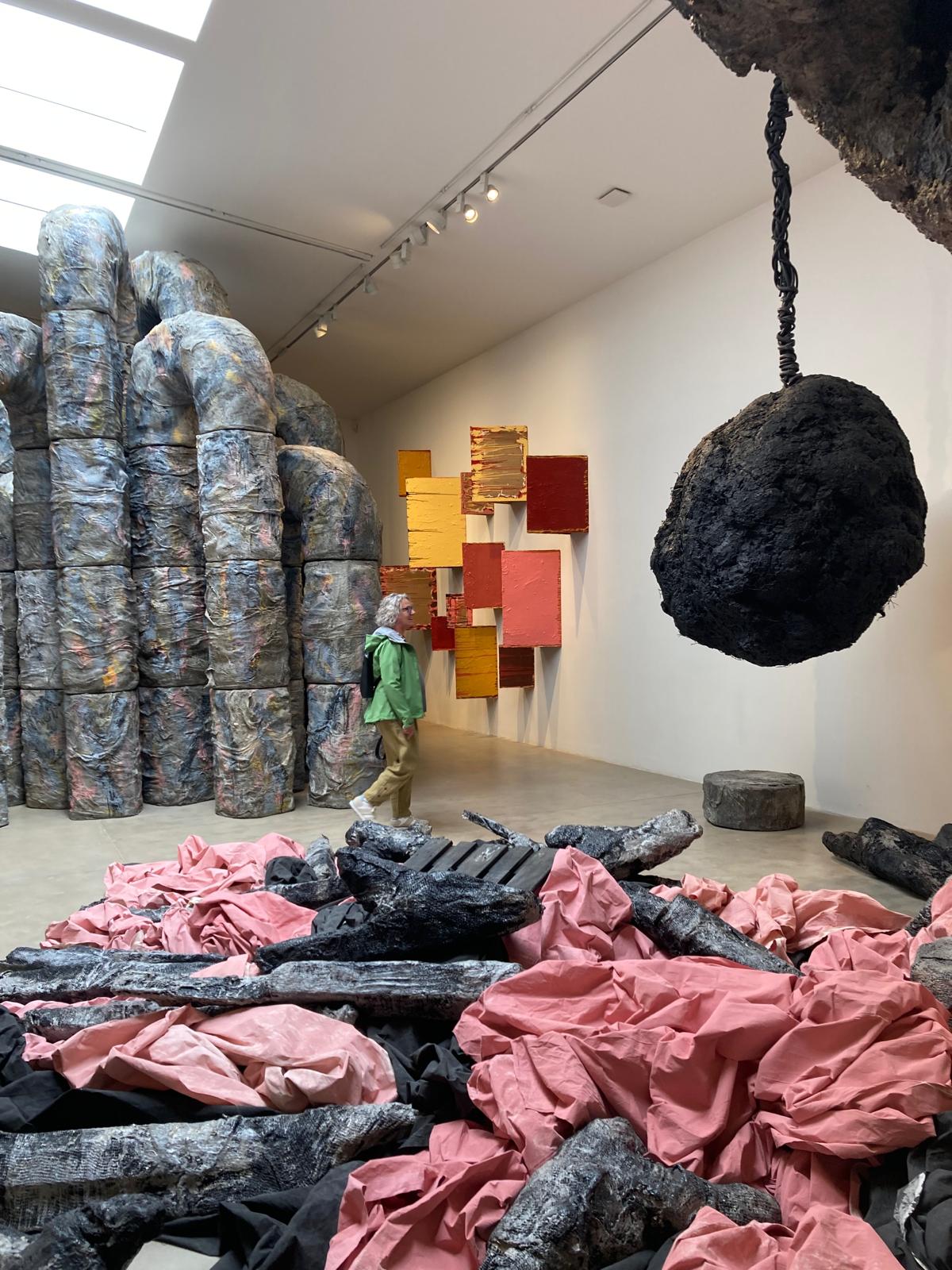
Phyllida Barlow: ‘Unscripted’ – Hauser and Wirth, Somerset

I very much wish to say a huge thank you to ACE (Arts Council England) and The National Lottery for their support and would encourage any artist to consider engaging with the process – the phone helpline is staffed by especially helpful people too if you’re unsure. Whether successful or not, the very task of identifying priorities and writing the bid is of considerable value. You can find out about DYCP applications here.

Please fell free to subscribe and receive my blog directly to your inbox. You can unsubscribe at any point.